The Andaman coast is easy to love and surprisingly easy to get wrong: the wrong island for your style, the wrong month for the park you came to see, or a base so far from the pier that every day trip starts at dawn. This guide is meant to prevent that.
Which island for whom
Every hub has a personality. This table is the short version; each name links to a fuller page from the islands index.
| Island / hub | Best for | Less good for | Season |
|---|---|---|---|
| Phuket | First visits, choice of beaches and hotels, nightlife, day trips everywhere | Peace and quiet; traffic | All year (west-coast swimming risky May–Oct) |
| Phang Nga Bay & Koh Yao | Scenery, canoeing, a quiet village-island stay | Classic swimming beaches | All year |
| Phi Phi | Maya Bay, Pileh Lagoon, young and lively atmosphere | Quiet nights in the village; value | All year (Maya Bay closes part of the green season) |
| Krabi, Ao Nang & Railay | Dramatic cliffs, 4 Islands, climbing, good value | Long, empty beaches | All year |
| Koh Lanta | Families, long stays, sunsets, calm | Nightlife; much is closed May–Oct | Nov–Apr |
| Khao Lak | Similan and Surin trips, divers, quiet resorts | Things to do in the monsoon | Nov–Apr |
| Similan & Surin Islands | Snorkelling and diving | Anyone prone to seasickness | Mid-Oct to mid-May only |
| Trang islands | Empty beaches, the Emerald Cave, switching off | Shops, ATMs, nightlife | Nov–Apr |
| Koh Lipe | Clear water, easy snorkelling, walkable island | Short trips — it is far | Nov–Apr best |
| Koh Phayam | Old-style bungalow life, no cars | Comfort and convenience | Nov–Apr |
 Phuket & Phang Nga Bay
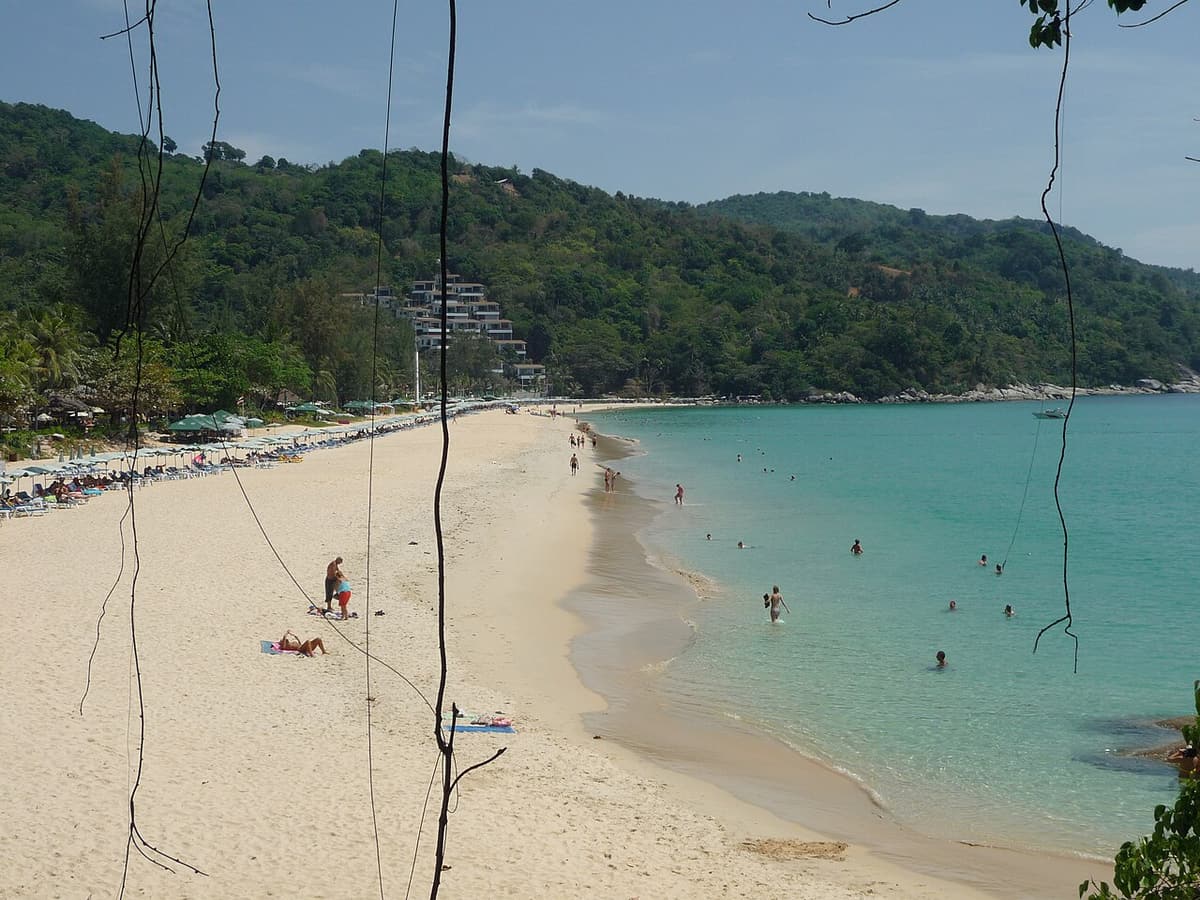
 Phuket
Thailand’s biggest island and the gateway to the Andaman Sea
A large, mountainous island joined to the mainland by a bridge, with an international airport, dozens of west-coast beaches, a handsome Sino-Portuguese old town and boats leaving every morning for Phi Phi, Phang Nga Bay and the Similans.
 Phuket & Phang Nga Bay
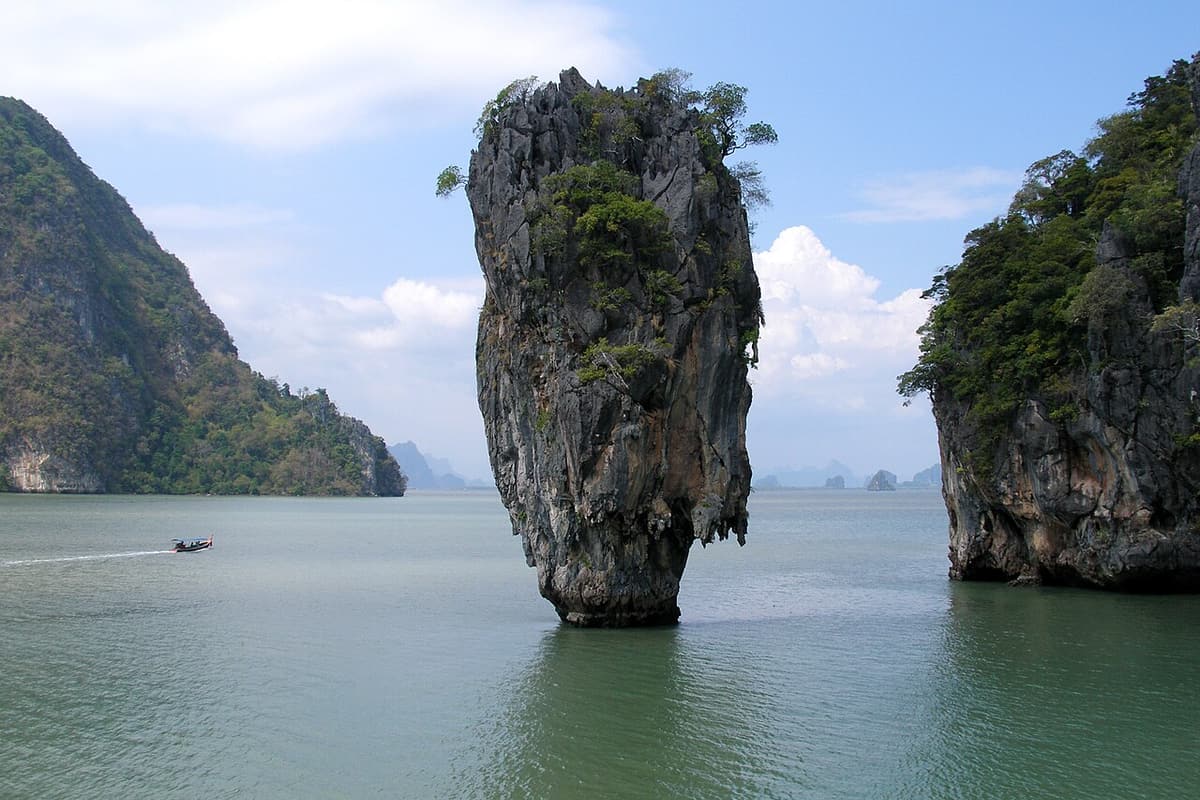
 Phang Nga Bay
Limestone towers, sea caves and James Bond Island
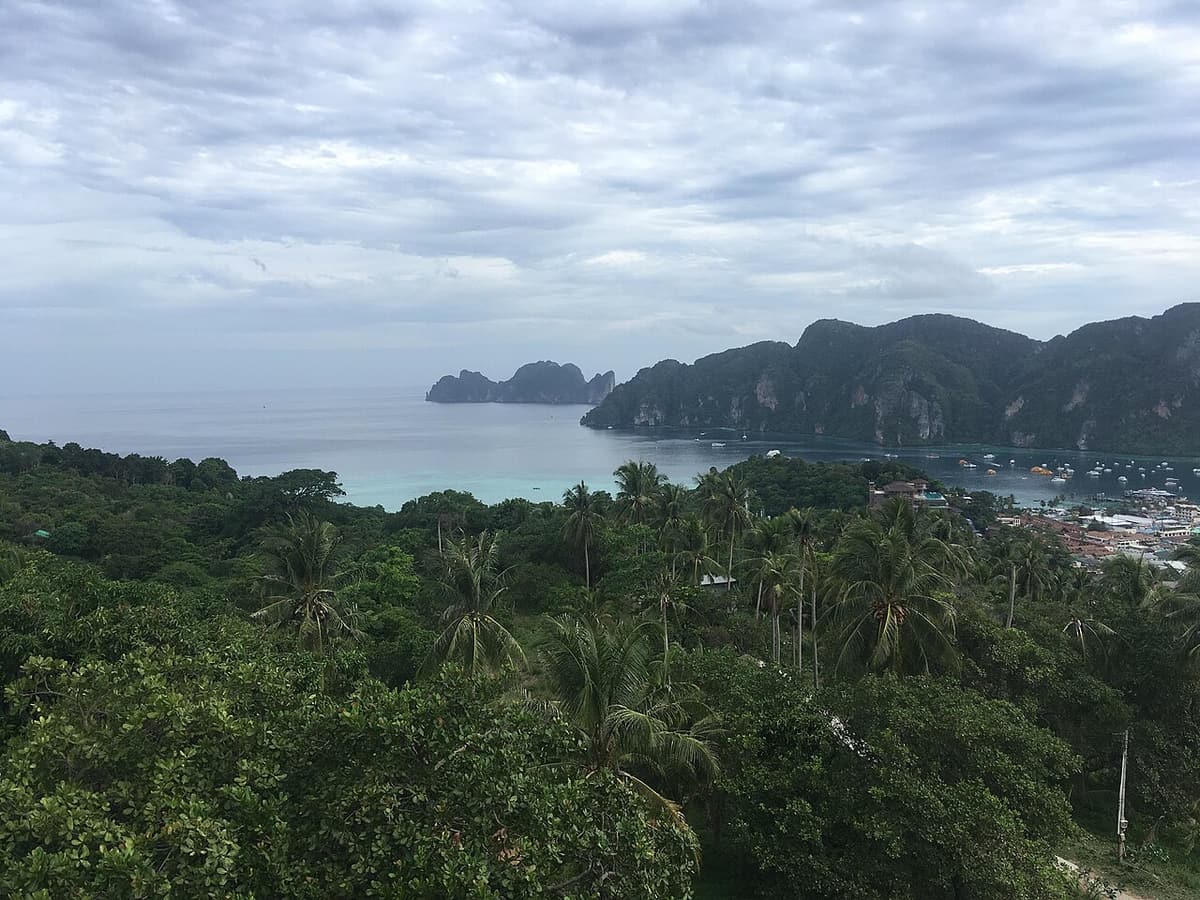
A shallow, sheltered bay between Phuket and Krabi studded with sheer limestone islands. Its hidden lagoons are explored by canoe through sea caves, and its best-known rock starred in a 1974 James Bond film.
 Krabi, Phi Phi & Koh Lanta
 Phi Phi Islands
Maya Bay, Pileh Lagoon and a car-free island village
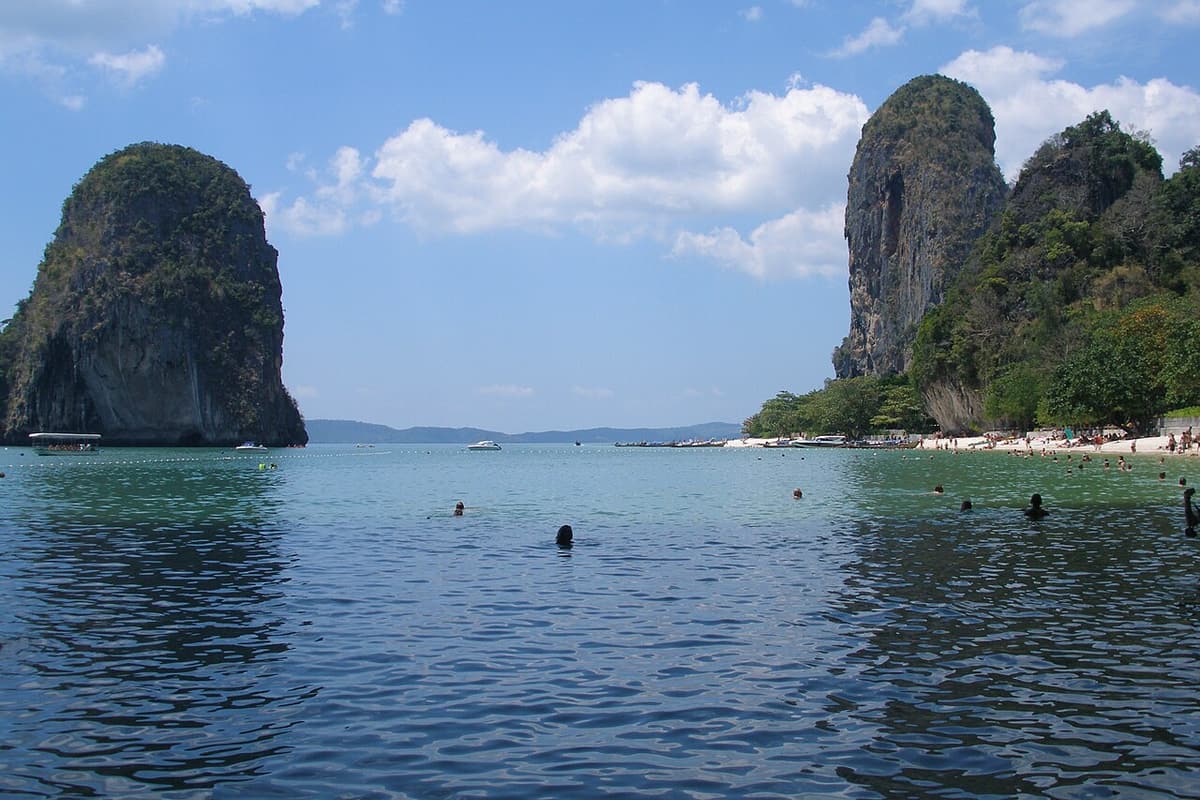
Six islands in a national park between Phuket and Krabi. Koh Phi Phi Don has the village, hotels and viewpoint; uninhabited Koh Phi Phi Leh holds Maya Bay and the cliff-walled Pileh Lagoon.
 Krabi, Phi Phi & Koh Lanta
 Krabi, Railay & Ao Nang
Cliff-backed beaches and the 4 Islands
The mainland coast of Krabi province: the resort strip of Ao Nang, the boat-access-only peninsula of Railay with its climbing cliffs and Phra Nang Beach, and day trips to the 4 Islands, the Hong Islands and the Tiger Cave Temple.
National parks: fees and rules
Most of the coast’s star attractions lie inside Thai national parks, which charge foreign visitors a higher entry fee than residents. The figures below are the adult fees that have applied in recent seasons; children usually pay half. They change from time to time, so treat them as a guide.
| National park | Covers | Foreign adult fee (approx.) |
|---|---|---|
| Mu Ko Similan | Similan Islands, Koh Bon, Koh Tachai | ≈500 baht (divers pay an extra daily fee) |
| Mu Ko Surin | Surin Islands, Richelieu Rock | ≈500 baht |
| Hat Noppharat Thara–Mu Ko Phi Phi | Phi Phi, Maya Bay, Bamboo Island, Koh Poda, Phra Nang | ≈400 baht |
| Ao Phang Nga | James Bond Island, Koh Panak, Koh Hong (Phang Nga) | ≈300 baht |
| Than Bok Khorani | Hong Islands (Krabi) | ≈300 baht |
| Mu Ko Lanta | Koh Rok, Koh Haa, southern tip of Lanta | ≈200–400 baht |
| Hat Chao Mai | Emerald Cave, Koh Kradan | ≈200 baht |
| Tarutao | Koh Lipe, Koh Adang, Koh Rawi, Koh Tarutao | ≈200 baht |
- Carry cash. Fees are frequently collected in baht at the pier or on the boat, even when a tour is prepaid. Some parks have moved to e-tickets booked in advance by the operator.
- Keep your ticket. It is usually valid for the day, and sometimes for several days within the same park.
- Closures. Similan and Surin close from about mid-May to mid-October. Maya Bay has closed for about two months (typically August–September) in recent years. Koh Rok, Koh Tarutao and parts of other parks also close in the monsoon.
- Quotas. The Similan Islands and Maya Bay limit daily or hourly visitor numbers. Book peak-season trips early.
- Banned in marine parks: single-use plastic and foam containers, feeding fish, taking shells or coral, flying drones without a permit and, in several parks, sunscreens containing reef-damaging chemicals.
Snorkelling and diving highlights
- Similan Islands — granite swim-throughs, clear water, turtles; manta rays most often at Koh Bon. Liveaboards from Khao Lak.
- Richelieu Rock — soft corals, macro life and the coast’s best chance of a whale shark, mainly February to April.
- Surin Islands — the best shallow hard-coral snorkelling in Thailand.
- Koh Haa and Koh Rok — lagoon, caverns and reef off Koh Lanta.
- Hin Daeng and Hin Muang — deep, soft-coral-covered pinnacles south of Lanta, for experienced divers; mantas and occasional whale sharks.
- Phi Phi and the King Cruiser wreck, Shark Point and Anemone Reef — the classic day dives from Phuket, Phi Phi and Ao Nang.
- Koh Lipe — easy longtail snorkelling around Adang and Rawi; soft-coral dives at sites such as Stonehenge and 8 Mile Rock.
- Racha Islands — sheltered bays south of Phuket, popular for training dives.
Water temperature is about 28–30 °C all year. Visibility is best from roughly February to April. Dive courses are widely available on Phuket, in Khao Lak, on Phi Phi, Lanta and Lipe.
Staying safe in the water
- Flags. Red means no swimming. A red-and-yellow pair marks a lifeguarded zone — swim between them. Yellow means caution.
- Rip currents. In the south-west monsoon, Phuket’s and Khao Lak’s west-facing beaches develop powerful rips, and drownings happen every year. If you are caught, do not swim against it: float, signal, and swim parallel to the shore until you are out of the current.
- Jellyfish. Stings are mostly minor, but box jellyfish are occasionally reported on this coast, more often in the rainy months. Many beaches have vinegar stations: douse the sting with vinegar, do not rub it, and get medical help quickly for a severe sting.
- Boats. Swim inside the buoyed areas. Longtail propellers are exposed and cause serious injuries every year.
- Sun. The tropical sun on open water burns in under an hour. A long-sleeved rash vest is the best protection and the kindest to the reef.
- Boat safety. Wear the life jacket on speedboats, and do not board an obviously overloaded boat or go out when the harbour master has closed the route.
Responsible travel
- Use reef-safe sunscreen — mineral formulas without oxybenzone or octinoxate — or better still, cover up.
- Do not feed fish, and do not join tours that do. It disrupts the reef and is illegal in the marine parks.
- Do not stand on or touch coral. If you are not a confident swimmer, wear the life jacket while snorkelling so you never need to put your feet down.
- Keep your distance from turtles, sharks and rays, and never chase or ride anything.
- Wild animals are not props. Do not feed monkeys; avoid elephant rides and shows in favour of observation-only sanctuaries.
- Respect the sea peoples — Moken, Moklen and Urak Lawoi — whose villages some tours visit. Ask before taking photographs.
- Refill, don’t rebuy. Small islands struggle with rubbish and fresh water. Carry a bottle and take batteries and plastics back to the mainland.
- Dress modestly away from the beach, especially in the Muslim villages of Koh Yao, Koh Lanta, Koh Panyee and Koh Mook.
Money, connectivity and getting around
The currency is the Thai baht. ATMs are everywhere on Phuket, in Ao Nang, Khao Lak, on Phi Phi Don and in northern Koh Lanta, but scarce or absent on the small islands — Kradan, Ngai, the Surin Islands and much of Koh Phayam — so bring cash. Most ATMs charge foreign cards a fixed withdrawal fee. Cards are accepted by hotels and larger restaurants. Mobile coverage is good on the mainland and big islands and patchy offshore.
On land, transport means taxis and ride-hailing apps on Phuket and around Krabi, songthaews (shared pickup trucks) on fixed routes, and rented scooters on the islands. Only ride a scooter if you are licensed and insured to do so, and always wear a helmet: road accidents are the biggest real risk to visitors.
What to pack
- Rash vest, hat and reef-safe sunscreen
- Your own mask and snorkel if you care about fit
- Dry bag and a waterproof phone pouch
- Sandals you can wade in
- Light rain jacket (essential May–October)
- Seasickness tablets and a basic first-aid kit
- A sarong or light clothing that covers shoulders and knees for temples and villages
- Soft luggage rather than a hard suitcase
Sample itineraries
One week, first visit
Phuket (3 nights) for a beach, the Old Town and a Phang Nga Bay trip; Phi Phi (1–2 nights); Krabi or Railay (2–3 nights) for the 4 Islands.
Ten days, quieter
Krabi or Railay (3 nights), Koh Lanta (4 nights) with Koh Rok and the Emerald Cave, Koh Yao Noi (3 nights) on the way back to Phuket airport.
Two weeks, the full coast (high season)
Khao Lak (3 nights) with the Similans; Phuket or Koh Yao (2 nights); Phi Phi (2 nights); Koh Lanta (3 nights); Koh Kradan or Koh Mook (2 nights); Koh Lipe (3 nights), leaving via Langkawi or Hat Yai. Boat details are in the island-hopping guide.